

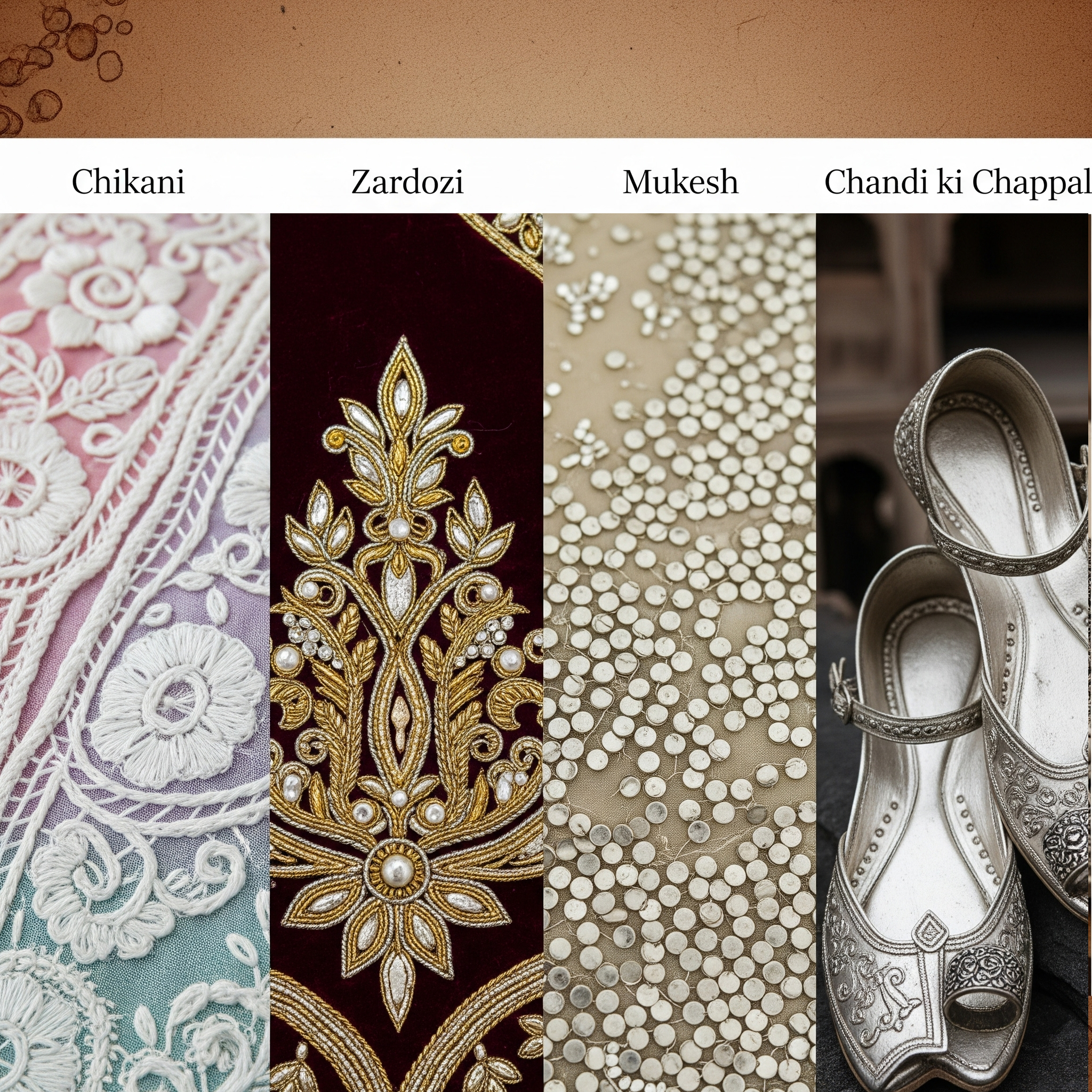
A Guide to Lucknow’s Must-Have Handicrafts for the Modern Wardrobe
Weaving Tales of Tradition and Trend in Lucknow
Lucknow, often celebrated as the “golden city of the east,” possesses a magnificent historical heritage intrinsically linked with its rich handicraft traditions. This multicultural city of Uttar Pradesh fostered an environment of emotional warmth, courtesy, and a sophisticated appreciation for gracious living, elements that deeply influenced its artistic landscape. For centuries, the Nawabs of Awadh were instrumental in promoting and patronizing fine arts and crafts, including renowned forms like Zardozi, Chikankari, and Zarbuland work. Their keen interest and encouragement spurred artisans to achieve exceptional levels of perfection, laying a robust foundation for the city’s celebrated craftsmanship. This enduring royal patronage transformed Lucknow into a magnet for tourists, who travel from distant places to acquire and experience its exquisite artisanal creations.
This article explores how Lucknow’s traditional crafts transcend their historical origins, evolving from mere artifacts into vibrant contemporary fashion statements. These artisanal creations are more than just garments or accessories; they embody centuries of cultural narrative, intricate skill, and profound identity. Each piece serves as a tangible link to a rich past, offering a unique form of “wearable heritage” that allows individuals to carry a piece of history and artistry into their modern lives.
The focus of this article will be on four iconic Lucknow handicrafts, each considered a must-have for any discerning wardrobe: the ethereal Chikankari, the regal Zardozi, the delicate shimmer of Mukesh work, and the rare Chandi ki Chappal. Each of these crafts encapsulates a distinct facet of Lucknow’s heritage, providing both aesthetic beauty and a profound connection to a storied cultural legacy.
Chikankari: The Ethereal Art of Lucknowi Embroidery
Chikankari, a delicate and intricate hand embroidery, stands as a proud creation of Lucknow, deeply woven into the city’s cultural fabric. Its timeless elegance and sophisticated charm have made it a staple in ethnic wear, particularly for women’s wardrobes.
Historical Roots and Royal Patronage
The origins of Chikankari are firmly rooted in the Mughal era, with its introduction to India believed to have occurred around the 16th or 17th century. Empress Nur Jahan, wife of Mughal Emperor Jahangir, is widely credited with bringing this exquisite Persian-inspired embroidery to the Indian subcontinent. The art form subsequently blossomed under the generous patronage of Mughal rulers within Lucknow’s culturally rich environment. As the Nawabs of Awadh rose to power in the 18th and 19th centuries, Chikankari gained tremendous popularity, becoming a potent symbol of nobility and royal elegance. Initially, Chikankari was characterized by its subtle aesthetic, featuring white thread on white muslin. Its designs drew profound inspiration from nature, particularly the serene Persian gardens, with motifs such as creepers (bail), delicate buds (phanda), tiny florals (buti), and leaves (patti) creating fluid and harmonious patterns.
The Artistry of Chikankari: Stitches and Techniques
Chikankari is renowned for its intricate and labor-intensive nature, demanding exceptional skill and artistry from its practitioners. It involves a complex array of stitches, traditionally numbering 36 distinct types.
Key Stitches and Their Characteristics:
| Stitch Name | Description | Visual Effect | Common Usage |
| Tepchi | A simple, long running stitch worked with six strands. | Forms outlines and foundational patterns. | Outlines of motifs, initial framework. |
| Bakhiya (Shadow Work) | Embroidery done on the reverse side of the fabric. | Creates a subtle, ethereal shadow effect on the front, adding depth. | Outlining intricate patterns, filling spaces, creating textures. |
| Phanda (Knot Stitch) | Small, raised knots formed by wrapping thread around the needle multiple times. | Resembles pearl drops, adding three-dimensional texture. | Floral motifs, filling small spaces, decorative accents. |
| Murri (French Knot) | A tightly wound knot, similar to Phanda but shaped like a grain of rice. | Creates a raised, textured look, often used for filling. | Filling petals and small motifs. |
| Jaali | A net-like effect created by manipulating threads without cutting the fabric. | Allows light and air to pass through, giving a breathable, regal feel. | Intricate patterns, creating lightness in garments. |
| Hool (Eyelet Stitch) | A fine detached eyelet stitch where a hole is punched and threads are worked around it. | Forms the center of flowers or small circular designs. | Centers of flowers, delicate eyelet patterns. |
| Zanzeera (Chain Stitch) | A series of interconnected loops resembling a chain. | Adds definition and a fluid line to designs. | Outlining motifs, creating intricate borders. |
| Rahet | A simple, solid stitch forming a thick line. | Highlights and provides structure to elements. | Stems and branches in floral patterns. |
Table 1: Signature Chikankari Stitches and Their Characteristics
The mastery of these diverse stitches allows artisans to breathe life into plain fabrics. The delicate shimmer and timeless elegance achieved in Chikankari are a direct result of the artisan’s precision and patience. Understanding how these distinct stitches contribute to the overall design provides a deeper appreciation for the craft, enabling a more informed recognition of authentic Chikankari and the immense skill involved in its creation.
Traditionally, Chikankari was worked on fine muslins, but its application has expanded significantly over time. Today, it adorns a wide range of fabrics including chiffon, silk, organza, organdie, doriya, georgette, cotton, and even rayon, resulting in comfortable yet regal-looking clothing.
Cultural Significance and Artisan Empowerment
Chikankari is far more than a mere decorative art; it is a profound “labor of love”. This craft plays a pivotal role in the local economy of Lucknow, generating crucial employment opportunities for countless artisans, weavers, and associated support industries. It has become a vital source of livelihood for many families, particularly empowering women artisans by offering them financial independence and avenues for skill development. Through this, Chikankari serves as a powerful means of socio-economic empowerment while simultaneously preserving India’s rich cultural heritage. Organizations such as Rangsutra and House of Chikankari are actively engaged in structuring this historically unorganized industry, ensuring the authenticity and quality of the craft, rekindling the pride of artisans, and providing essential economic and social upliftment to their households.
Evolution into Modern Fashion: Wearable Art for Today
Chikankari has demonstrated remarkable adaptability, seamlessly transitioning from the exclusive domain of royal courts to the dynamic world of contemporary fashion runways. This evolution reflects a conscious effort to maintain its authenticity while appealing to a broader, diverse audience.
The traditional motifs, deeply inspired by nature and Persian art, remain core to Chikankari, encompassing delicate floral designs like bail, buti, phanda, and jaali. However, designs have expanded to incorporate geometric shapes and abstract artistry. Modern patterns skillfully balance bold butis at the hem with delicate jaali work on the neckline, demonstrating a playful yet precise manipulation of density and scale. The strategic use of asymmetrical motif placement in garments like A-line kurta sets, co-ord sets, and collared kurtas creates both structure and fluid movement.
While the classic white-on-white embroidery remains popular, the color palette of Chikankari has significantly expanded. It now features a vibrant spectrum of pop tones, soft pastels, moody hues, and earthy pigments, and is also executed with vibrant threads on colored fabrics.
This adaptability extends to contemporary silhouettes. Beyond traditional kurtas, sarees, and salwar suits, Chikankari is now gracefully integrated into co-ord sets, minimalist dresses, tunics, crop tops, jumpsuits, blazers, jackets, and palazzo sets. This versatility makes it suitable for a wide range of occasions, from casual wear and office attire to festive celebrations and sophisticated fusion looks.
The visibility of Chikankari has been significantly boosted by its embrace in Bollywood, making it both accessible and aspirational for a wider audience. Its inherent visual lightness and breathable nature make it an ideal match for contemporary fabrics, appealing particularly to younger audiences and working professionals who seek a “tradition with a twist” in their fashion choices. Furthermore, Chikankari inherently aligns with principles of sustainable fashion. As a hand-stitched craft on breathable natural fabrics with minimal chemical intervention, it presents an eco-chic choice for conscious consumers. Each piece, requiring 10 to 12 hours of an artisan’s dedication, is a quiet masterpiece that speaks of patience, story, and identity, offering a powerful counter-narrative to mass-produced fashion.
Zardozi: The Grandeur of Metallic Embellishment
Zardozi, a name synonymous with opulence and intricate metallic artistry, represents another cornerstone of Lucknow’s rich handicraft tradition. Its journey from ancient origins to its current prominence in high fashion underscores its enduring appeal.
A Journey Through History: From Ancient Origins to Royal Zenith
Zardozi is a captivating form of metal embroidery whose origins can be traced back to the Rigveda era, having been introduced to India from Central Asia in the 12th century. This ornate and sumptuous craft found profound patronage among the affluent and courtly classes, flourishing particularly under the Mughal emperors and the Nawabs of Awadh. This royal endorsement was so significant that it helped place Lucknow firmly on the world map of fashion. Historically, Zardozi adorned the garments of nobility and embellished ceremonial attire, serving as a powerful symbol of wealth and splendor.
The Intricate Craft: Materials and Process
The creation of Zardozi is a complex and labor-intensive process, demanding exceptional skill and precision.
Materials: Traditionally, Zardozi utilized actual gold and silver wires, along with precious seed pearls and gemstones. In contemporary practice, these precious materials have largely been replaced by more affordable imitations, though the characteristic glitter and opulence of the style are meticulously retained. The embroidery is typically executed on rich and luxurious fabrics such as velvets, brocades, and silks. Beyond metallic threads—often gold and silver bullion threads—various embellishments like plastic and glass beads, sequins, and spangles are incorporated to enhance the designs.
Process: The meticulous process begins with the preparation of the fabric. It is stretched taut and fixed onto a wooden frame known as an ‘adda’. Artisans typically sit around this frame, which is adjustable to the fabric’s size, allowing for comfortable work with both hands—one guiding the thread from below, the other wielding the needle from above. The design is initially traced onto gateway paper, perforated to create a stencil, and then transferred onto the fabric using a powder mixed with kerosene oil. For the embroidery itself, while a simple needle can be used, a hook-tipped awl, locally called ‘ari’, is commonly employed for its efficiency in passing threads through the fabric. Finally, beads, sequins, and crystals are painstakingly sewn or fixed onto the fabric, adding to its grandeur. The creation of a heavily embroidered full ensemble can take a team of seven to eight artisans several weeks to complete, underscoring the significant time and labor investment required. Beyond general hand embroidery, Zardozi encompasses specific styles such as Shisha (incorporating mirror fragments), Zari (focused on metallic threads), Aari (hook-based work), Dabka (raised stitches for depth), Kundan (using glass or metal bits), Resham (fine silk threads), and Gota Patti (a lace technique with gold/silver threads).
A closer examination of Zardozi’s material evolution reveals a strategic adaptation that has been crucial for its modern resurgence. Historically, the craft relied on actual gold and silver wires, along with precious seed pearls and gemstones, making it an exclusive luxury. However, the subsequent adoption of lower-priced imitations has broadened its market appeal, allowing it to transition from being solely for royal courts to becoming a favorite for weddings and fashion ramps. This shift in materials, while moving away from the most precious original components, has been instrumental in making Zardozi more accessible, thereby contributing significantly to its popular revival. This illustrates a common challenge and solution for many traditional crafts: balancing the authenticity of historical techniques with economic viability and contemporary market demand. For heritage crafts to survive and thrive, a degree of material and stylistic evolution is often necessary, even if it means adapting from their most opulent origins. This also highlights the importance of consumer understanding regarding the distinction between material value and the enduring artistry of the technique itself.
Styling for Today: Integrating Zardozi into the Modern Wardrobe
Zardozi has successfully found a significant place in modern fashion, skillfully blending its traditional craftsmanship with contemporary aesthetics. It is no longer confined exclusively to royal courts or bridal trousseaus, demonstrating its versatility and broad appeal.
| Technique/Type | Description | Traditional Application | Modern Styling Notes |
| Hand Embroidery | Meticulous needlework done entirely by hand. | Royal garments, ceremonial attire. | High-end formal wear, statement pieces, bridal ensembles. |
| Shisha | Incorporates tiny mirror fragments sewn onto fabric. | Festive wear, folk costumes. | Glamorous accents on dresses, accessories, fusion tops. |
| Zari | Focuses on elaborate patterns using metallic (gold/silver) threads. | Sarees, lehengas, turbans. | Borders on contemporary sarees, kurta sets, evening bags. |
| Aari | Uses a hook (aari) to create uniform, intricate motifs. | Clothing, accessories, furniture. | Structured jackets, modern tunics, embellished footwear. |
| Dabka | Features tiny, raised stitches to create depth and texture. | Heavy bridal wear, formal garments. | Textured elements on blouses, formal skirts, statement collars. |
| Kundan | Utilizes flat, tiny bits of glass or metal for a glittering effect. | Jewelry, royal attire embellishments. | Embellished necklines on gowns, decorative patches on fusion wear. |
| Resham | Employs fine silk threads for elaborate patterns. | Delicate garments, understated luxury. | Soft, flowing dresses, elegant scarves, subtle embroidery on contemporary silhouettes. |
| Gota Patti | A lace technique using gold and silver threads to create intricate patterns. | Bridal wear, festive sarees. | Borders on party wear, fusion capes, decorative trims on modern outfits. |
Table 2: Key Zardozi Techniques and Their Modern Applications
In ethnic wear, Zardozi remains a fundamental element for festive occasions and weddings. Zardozi borders or motifs impart unmatched grace to sarees and lehengas, while Zardozi-embroidered kurtas can be elegantly paired with palazzos or dupattas for a chic festive appearance. Bridal Zardozi lehengas and sarees are consistently regarded as essential bridal attire.
Beyond traditional attire, Zardozi is making significant strides in contemporary Western fashion. Jackets, dresses, tops, and skirts adorned with Zardozi details seamlessly blend traditional artistry with modern design, elevating casual outfits or serving as striking statement pieces. For those preferring subtle elegance, Zardozi-embellished accessories such as clutches, belts, shoes, handbags, bangles, and headpieces offer a touch of luxury without overwhelming the overall look. Furthermore, the artistry of Zardozi has found relevance in home decor, with items like cushions, wall hangings, sofa throws, and curtains adding a luxurious touch to living spaces.
Styling Zardozi effectively involves a thoughtful approach. When a piece is heavily embellished, keeping other accessories minimal allows the embroidery to be the focal point. Mixing and matching Zardozi with plain or lightly patterned fabrics creates a harmonious balance. Layering, such as adding a Zardozi-embroidered jacket or shawl, can effortlessly transform a simple outfit. For modern elegance, pastel Zardozi sarees can be paired with sleek high-neck blouses and minimalist accessories, while dark-hued Zardozi sarees adorned with statement earrings are ideal for evening glamor. Choosing Zardozi also represents an ethical decision, as it directly supports artisans and their sustainable livelihoods, often backed by vital livelihood programs for women and corporate social responsibility (CSR) initiatives.
Mukesh Work: The Subtle Shimmer of Lucknow
Mukesh work, also known as Mokaish, Mukeish, or Mukesh, is a distinctive embroidery technique originating from Lucknow, celebrated for its delicate shimmer and ability to enhance other textile arts.
Origins and Symbiotic Relationship with Chikankari
Mukesh embroidery emerged as a specialized technique primarily intended to beautify Chikankari embroidery, and the two crafts frequently go hand-in-hand. This symbiotic relationship allows Mukesh work to impart a subtle metallic shimmer that complements and elevates the delicate threadwork of Chikankari. The technique itself traces its origins to Mughal rule in the 16th century, where metal embroidery, or badla, was developed by pressing metal wires through perforated sheets to create thin threads for embellishment.
The Delicate Process: Transforming Metallic Wires
Mukesh work involves meticulously twisting thin metallic threads to create patterns, with dots being the most common motif found across the fabric.
Materials: Historically, Mukesh work was capital-intensive due to its reliance on precious metals like gold and silver. Over time, more affordable alternatives such as plain steel and colored steel have been adopted, making the craft more accessible while retaining its characteristic sparkle. The metallic thread used is typically very fine.
Fabrics: This delicate embroidery is usually performed on fine, semi-transparent fabrics, including chiffon, georgette, muslin, net, and silk, which allow the metallic elements to stand out beautifully.
Process Steps: The intricate process of Mukesh embroidery follows three primary steps:
- Chapaayi: The desired motif is first printed onto the fabric. This is achieved using a mixture of gum and indigo powder, which can be transferred either with a block or a perforated paper stencil.
- Takaayi: This step involves the preparation and application of the metallic wire. The metal wire is stretched into thin strips, then passed through fire to achieve various hues. Subsequently, it is cut into finer breadths and painstakingly hammered to attain a paper-thin density. This extreme thinness is crucial, allowing the wire to be delicately woven in and out of fine fabrics, which in turn contributes to the overall finesse of the finished piece.
- Ghutaayi: Once the embroidery is complete, the fabric is spread flat, typically over a blanket to prevent dirt or stains. The embroidered areas are then thoroughly rubbed with a smooth glass bottle or cowrie shells. This action serves to eliminate any lumps in the embroidery and, more importantly, burnishes the metal, leaving it brighter and shinier.
Mukesh embroidery demands a high level of skill and considerable patience from the artisans. The stitches are small and closely spaced, and the metallic thread itself is delicate and prone to breakage. Consequently, completing a single piece can be a time-consuming endeavor, often requiring several days or even weeks.
Distinctive Styles: Fardi Ka Kaam and Kamdani
Mukesh work manifests in two primary patterns or styles, each offering a distinct aesthetic:
- Fardi Ka Kaam: Literally translating to “dots,” this is the most widely recognized and beloved form of Mukesh work. It encompasses various sizes and patterns of dots, each with its own specific name. Notable examples include “Hazaar Batti” (meaning “thousand dots”), “Tikki” (which appears as flattened sequins), and “Challa” (translating to “rings”). The tikki and challa motifs are extensively used to enhance the overall design, with the size of the dots determined by the wire’s width; finer dots are generally more expensive.
- Kamdani: In this style, the metallic wire is attached to a small length of thread to facilitate threading a needle, allowing artisans to work the wires into a variety of patterns and motifs, often referred to as “fancy kaam”. While some sources consider Mukesh, Badla, and Kamdani as having slight variations but being broadly similar, others distinguish Kamdani as traditionally being done on cotton fabrics with different techniques and threads.
The consistent emphasis in the available information is that Mukesh work “transpired as a way to beautify Chikankari embroidery” and that “Chikankari and Mukaish work go hand in hand”. This recurring theme indicates that Mukesh work is not typically a standalone craft but rather an enhancing technique for Chikankari. Descriptions of how Mukesh work “highlights the embroidered patterns or to add an extra layer of shine” further reinforce this complementary role. This relationship highlights the collaborative and layered nature prevalent in some traditional crafts. It suggests that the full beauty and market value of Mukesh work are often realized when it is combined with another art form, such as Chikankari. This integration creates a richer visual texture and results in a product that is perceived as more “festive and elegant”. Consequently, the survival and thriving of Mukesh work are often intrinsically linked to the demand and popularity of Chikankari, making it a dependent yet vital component of Lucknow’s textile heritage.
Modern Integration: Delicate Shimmer for Contemporary Wardrobes
Mukesh work imparts a delicate shimmer and a glamorous, celebratory touch to garments, making them exceptionally suitable for festive and formal occasions. It is commonly featured on traditional attire such as lehengas, sarees, Anarkali suits, and dupattas, often scattered across the body of the fabric or concentrated on the pallu and borders.
In modern styling, Mukesh work is seamlessly integrated into contemporary silhouettes. Examples include comfortable cotton kurta palazzo sets ideal for casual wear, pure silk Kamdani dupattas for weddings, premium hand-embroidered kurtis, elegant Chinon silk gown sets, and even exquisite organza pieces. The combination of delicate thread work and metallic beads or sequins creates a rich and captivating visual texture. Given its delicate nature, Mukesh work requires careful maintenance; dry cleaning or soft machine washing is recommended to preserve the intricate stitches and metallic threads.
Chandi ki Chappal: Lucknow’s Rare Silver Footsteps
The Chandi ki Chappal, or silver slippers, represents one of Lucknow’s most unique and increasingly rare crafts. This exquisite footwear, once a hallmark of royal splendor, is now a symbol of a fading legacy, maintained by only a handful of dedicated artisans.
A Fading Legacy: History and Rarity
The Chandi ki Chappal is frequently described as a “dying art” or “fading silver footsteps,” highlighting its precarious status in contemporary times. The craft’s origins are traced back to Iranian forefathers, with artisans settling in Lucknow during the affluent Nawabi era due to significant demand for their work. Today, the number of artisans capable of producing these intricate silver slippers is critically low, with some reports even suggesting that there are “no naqqashi artisan left now” who can continue the work due to a lack of consistent income. Production is not in bulk; instead, orders are typically placed by large jewelry stores, indicating a niche and specialized market.
The Art of Naqqashi: Intricate Craftsmanship
The defining characteristic of these silver sandals lies in their elaborate embellishments, achieved through a technique known as ‘Naqqashi’ or repoussé work. Naqqashi is the art of pressing and engraving silver sheets onto various items, including slippers, to create an elegant and visually rich appearance.
Process: The craftsmanship involves the rhythmic movements of a hammer and chisel, meticulously beating sterling silver sheets into intricate patterns. Artisans like Zawwar Hussain often use their original compositions for designing, skillfully engraving complex motifs onto silver plaques. The techniques employed include delicate filigree work, known locally as ‘jaali’, detailed engravings that showcase traditional Mughal motifs, and the precise incorporation of kundan and precious gemstones.
Materials: These unique slippers are crafted from pure sterling silver and can be adorned with gemstones. They are designed for comfort, featuring soft leather cushioning on the inside and multi-layered soles for durability and support.
Labor-Intensive Nature: The creation of Chandi ki Chappal is a painstaking process that demands immense skill and meticulous attention to detail. It often involves long hours of continuous hammering and is typically a multi-person endeavor, encompassing silver cutting, the intricate naqqashi work, and final assembly.
Cultural Significance: From Nawabi Luxury to Bridal Tradition
Historically, these silver jootis were a clear indicator of the wearer’s high status, wealth, and superiority. They were worn by Nawabs and, in contemporary times, have become a rare luxury, frequently chosen by brides for their wedding day. Each pair offers a “glimpse into culture you can wear,” embodying centuries of tradition. This craft is an integral component of Lucknow’s cultural heritage, underscoring the critical need for its preservation.29
The repeated emphasis on the “dying art” status, the struggle of artisans due to “lack of proper and continuous income”, and the reluctance to “pass the artform down to future generations” reveals a significant economic vulnerability for this niche heritage craft. Despite being a “valuable investment” and experiencing consistent demand during wedding seasons, the overall economic value generated appears insufficient to sustain artisans year-round. This points to a critical disconnect: while the intrinsic value and price per piece are high, the low volume of production or inconsistent demand prevents a steady income stream necessary for the craft’s long-term viability. This situation exemplifies the precarious existence of highly specialized, low-volume heritage crafts in a modern economy. For such crafts to endure, they require not only cultural appreciation but also sustained market linkages, potentially through government initiatives like “hunar haats” (handicraft markets) or direct support mechanisms to ensure a stable livelihood and incentivize new generations to learn and continue the skill. The challenge extends beyond mere skill preservation to the fundamental economic viability of the art form.
Styling with a Modern Outfit: A Statement Piece
While traditionally reserved for special occasions, these unique silver slippers can indeed be incorporated into contemporary fashion as a striking statement piece. The inherent metallic sheen and intricate detailing of the Chandi ki Chappal lend themselves well to fusion fashion. Similar to how other traditional Indian footwear like Punjabi Juttis are styled, these silver slippers can be paired with modern outfits to create a compelling “fusion of tradition and modernity”. Their versatility allows for diverse pairings: they can introduce an “ethnic elegance” to casual ensembles such as jeans and a simple cotton top, or elevate a flowing maxi dress for a sophisticated boho-chic aesthetic. For more elevated occasions, they could serve as a unique and comfortable alternative to high heels, complementing a cocktail dress or jumpsuit. When styling, their intricate silver work naturally makes them a focal point. They can be paired with minimalist accessories to allow the footwear to shine, or with complementary silver jewelry for a cohesive and polished look. The explicit interest in styling them with modern outfits suggests a significant market opportunity for the craft’s potential revival, by catering to a contemporary fashion sensibility beyond its traditional bridal role.
Embracing Lucknow’s Artisanal Legacy: A Call to Conscious Fashion
Lucknow’s handicrafts, encompassing the delicate Chikankari, the opulent Zardozi, the shimmering Mukesh work, and the rare Chandi ki Chappal, collectively form the vibrant backbone of the city’s cultural identity and economic heritage. These crafts are not merely products; they are living testaments to generations of skill, creativity, and the profound patronage that shaped Lucknow’s distinctive “Tehzeeb” (culture). Beyond their aesthetic appeal, they provide essential livelihoods for thousands of artisans, significantly empowering women, and contribute substantially to the local economy.5
The enduring beauty and cultural richness of these crafts, however, are not without challenges. Many, particularly the Chandi ki Chappal, face the threat of decline due to economic pressures and the increasing difficulty of transmitting these specialized skills to new generations. Therefore, supporting these artisans through conscious purchasing choices is paramount. Such choices help to preserve invaluable traditions, ensuring the continuity and vitality of these unique art forms. In an era dominated by mass production, investing in these handcrafted items represents a commitment to “slow craft,” valuing the patience, story, and identity meticulously woven into each piece.
These “must-have” items are more than just additions to a wardrobe; they are tangible connections to a rich past and a vibrant cultural legacy. Wearing them is an act of celebrating artistry, a statement of cultural appreciation, and a commitment to supporting sustainable and ethical fashion practices. They embody a harmonious blend of heritage and modernity, serving as compelling evidence that traditional art forms hold a significant and beautiful place in contemporary lifestyles.
Table 3: Comparative Snapshot of Lucknow’s Must-Have Handicrafts
| Craft | Primary Materials | Key Characteristic | Modern Styling Potential |
| Chikankari | Cotton, silk, georgette, chiffon, muslin, rayon; cotton/silk threads. | Delicate, intricate hand embroidery with subtle textures and shadow work. | Everyday kurtas, co-ord sets, minimalist dresses, fusion tunics, contemporary sarees. |
| Zardozi | Velvets, brocades, silks; metallic (gold/silver) threads, beads, sequins, imitation gemstones. | Opulent, heavy metal embroidery creating rich, three-dimensional patterns. | Festive lehengas, bridal sarees, statement jackets, embellished blouses, luxury accessories. |
| Mukesh Work | Chiffon, georgette, muslin, net, silk; fine metallic wires (gold/silver, steel imitations). | Subtle, shimmering metallic dots or patterns, often complementing Chikankari. | Elegant dupattas, embellished sarees, Anarkali suits, fusion gowns, party wear. |
| Chandi ki Chappal | Sterling silver, leather, gemstones. | Rare, intricately engraved silver footwear (Naqqashi work). | Unique statement footwear with modern outfits (jeans, maxi dresses, jumpsuits), bridal attire. |


